


Six months ago, we set a simple goal: build a course that would teach ordinary people how to spot phishing emails and avoid getting hacked. We made it free. We put it online. We hoped a few thousand people would take it.
Then the numbers came in.
3,500 people completed our Free Cybersecurity Awareness Training in the last six months. And 221 of them told us the certificate helped them land their first job in cybersecurity.
That second number stopped us cold. We did not build the Free Cybersecurity Awareness Training to launch careers. We built it to reduce phishing incidents and bring basic cybersecurity awareness to people who might otherwise never get it. But the data is the data, and the messages we are getting from learners are even more striking than the spreadsheet. Something is happening in the cybersecurity hiring market, and our $1 certificate is sitting right in the middle of it.
Here is the full story — what we built, why it worked, and what the people who completed the Free Cybersecurity Awareness Training are telling us about why employers suddenly care about a certificate that costs less than a cup of coffee.
3,500 Students in 6 Months — And We Were Not Trying to Go Viral
Let us be honest about expectations. When we launched our Free Cybersecurity Awareness Training, we estimated maybe a few hundred completions in the first six months. We did not run paid ads. We did not pay influencers. We did not buy email lists. The course is hosted at computersecurity.us, and the only marketing has been word of mouth, a handful of blog posts, and people sharing their certificate on LinkedIn.
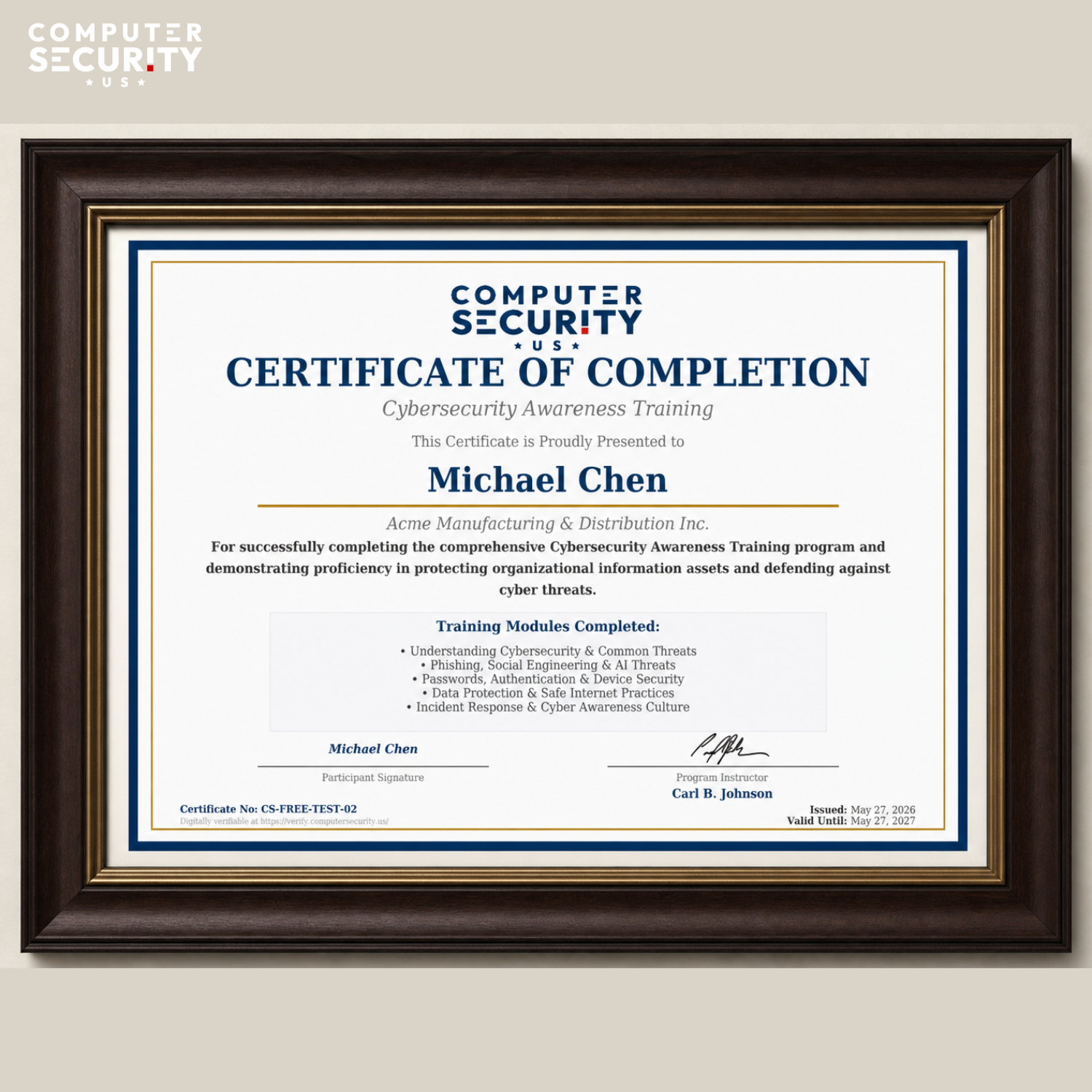
3,500 completions later, we know we underestimated the demand. People are hungry for cybersecurity knowledge they can actually use. They are tired of training that charges hundreds of dollars or buries the content under hours of corporate compliance theater. They wanted something direct, free, and respectful of their time. We built that. They showed up.
The breakdown of who took the training is a story in itself. Small business owners worried about ransomware. Retirees targeted by scam calls. IT professionals brushing up on the human side of security. Parents trying to understand what their kids face online. And — increasingly — a wave of people in their twenties and thirties who were trying to break into cybersecurity as a career and had no idea where to start.
That last group is where the 221 number comes from.
221 People Said the Certificate Helped Them Get Hired
We did not ask people whether our Free Cybersecurity Awareness Training helped them get a job. We never built that question into the course. People volunteered the information. They emailed us. They posted on LinkedIn tagging the training. They left reviews on our reviews page. They told us, often in the same breath, two things: this was the first cybersecurity training I actually finished, and this certificate got me through the door for an interview.
221 separate people in six months. That is more than one a day, every single day, telling us that a free course and a $1 certificate moved them from "I want to work in cybersecurity" to "I have a job offer."
The roles they reported landing were exactly what you would expect at the entry level — help desk positions with a security focus, SOC analyst Tier 1 roles, IT support jobs that explicitly required cybersecurity awareness, junior compliance roles, and a surprising number of administrative positions at security-conscious companies that wanted any candidate with documented security knowledge. None of these are CISO jobs. None of them are six-figure penetration testing gigs. They are the first rung — and for 221 people, that first rung was reachable because they had something concrete to put on a resume.
Read the words of the people who took the Free Cybersecurity Awareness Training on the reviews page. The pattern is consistent. They are not thanking us for inspirational content or for changing their lives in some abstract way. They are thanking us for giving them something a hiring manager could verify in 30 seconds.
What Employers Are Actually Looking For
Here is the part of the story that did not exist five years ago.
Talk to anyone hiring for entry-level cybersecurity roles in 2026, and you will hear the same complaint over and over: everyone says they are interested in cybersecurity. Almost nobody can prove it.
Resumes are crowded with the same self-described phrases — "passionate about cybersecurity," "strong interest in information security," "self-taught learner." Hiring managers cannot tell those candidates apart. They have no efficient way to figure out which applicants have actually invested any time in learning the basics.
That is why a certificate matters. Not because it makes you an expert. Not because it replaces a degree or industry certifications like Security+ or CISSP. A certificate matters because it is evidence. It says: I did the work. I finished something. I did not just claim to be interested — I proved it.
Based on feedback we have received from employers and recruiters who hired our graduates, this is exactly what they want at the entry level. Not advanced expertise. Not years of experience. Evidence of commitment and a baseline understanding of how phishing works, what social engineering looks like, why password hygiene matters, and how to recognize a security incident when one is happening. Those are the things our Free Cybersecurity Awareness Training teaches.
One recruiter who reached out to us put it this way: when she sees a junior candidate with our certificate on their resume, she does not assume they are an expert. She assumes they are someone who can be trained. That is the difference between getting an interview and getting passed over.
Why We Made the Training Free in the First Place
The original mission has not changed. The Free Cybersecurity Awareness Training exists because phishing is the single most common entry point for cyberattacks against individuals and small businesses, and the people most vulnerable to it are the people who can least afford expensive training. If a small business owner gets phished and ransomware locks up their files, they may never recover financially. If a retiree clicks a fraudulent link and loses their savings, that money is usually gone forever. We could not in good conscience put a paywall between people and the basic knowledge that would protect them.
So we made it free. The five modules cover the foundations: how to recognize phishing emails, how social engineering manipulates human psychology, password and account security, safe browsing and device hygiene, and what to do when something goes wrong. The pass threshold is 85 percent — high enough that a certificate actually means something, low enough that anyone who pays attention can earn it.
That was the plan. And then the resume-evidence problem turned our awareness training into an accidental career launchpad.
Why the Certificate Costs $1 (And Why That Number Is Intentional)
This is the part we want to be transparent about, because we know it raises eyebrows.
The training is free. Always has been. Always will be. You can go through every module, take every quiz, and learn everything we teach without paying a dime. If you finish the course and never want the certificate, that is fine. The knowledge is yours.
The certificate costs $1.
Not $99. Not $49. Not $19.99. One dollar.
People ask us why we charge anything at all. The answer is simple, and we are going to say it plainly:
We do not charge to get rich. We charge to show commitment.
A free certificate is something anyone can claim. A certificate someone paid for — even one dollar — is something a person chose to obtain. That tiny transaction filters out the people who were never going to use the credential anyway and elevates the certificate for the people who do. When a hiring manager sees our certificate on a resume, they know the candidate cared enough to complete a course and formally request the credential. That is signal. That is commitment.
If we charged $99 we would be excluding the very people the training was built for — small business owners, retirees, career changers, students. If we charged nothing, the certificate would carry no signal value at all. One dollar is the lowest price point that still demonstrates someone actually wanted the credential. It is not a profit center. It is a filter. It is also enough to cover payment processing, certificate generation, and email delivery.
If a dollar is genuinely a hardship for someone, they can email us and we will figure it out. We have done it before. We will do it again. Nobody who actually wants to learn is going to be priced out of this.
What the Reviews Are Telling Us
If you want the real story of what the Free Cybersecurity Awareness Training has done for people, do not take our word for it. Read the reviews at computersecurity.us/reviews.
The themes that come up over and over are striking. People talk about how the course finally made cybersecurity make sense after years of confusing corporate training. They talk about catching phishing emails at work because they recognized the patterns from a module. They talk about feeling more confident handling their finances online. And — yes — they talk about getting interviews and job offers because the certificate gave them something concrete to show.
What is missing from the reviews is just as telling. Nobody complains about being upsold to a more expensive product, because there is not one. Nobody complains about being spammed, because we do not sell the email list. The course delivers what it promises, and the price is what it says it is.
The Hiring Market Is Shifting, And You Can Get In Front of It
Cybersecurity has been the most-hyped career field in technology for years. Every report you read says there are hundreds of thousands of open jobs. Every career counselor tells students this is the field to enter. But the people actually trying to enter it know a different reality — entry-level jobs are competitive, employers are inundated with underqualified applicants, and the gap between "I want to work in cybersecurity" and "I have a job in cybersecurity" is wider than the hype suggests.
The certificate gap is one of the reasons. Industry-standard certifications like CompTIA Security+ cost hundreds of dollars and require serious study. Vendor certifications cost thousands. There has been almost nothing in the middle — no low-cost, easy-to-earn credential that demonstrates a person has the basics down and is serious about the field. Our Free Cybersecurity Awareness Training has quietly filled that gap for 221 people in the last six months, and we expect that number to keep climbing.
If you are reading this and thinking about a cybersecurity career, here is the unvarnished advice: our certificate is not going to make you a senior security engineer. It is not going to replace Security+ or any other industry credential you eventually need. But it can absolutely be the first credential on your resume — the one that gets you past the initial screen, into an interview, and into your first role where you can build real experience. From there, the better-paying credentials and the better-paying jobs come in time.
The 221 people who used our Free Cybersecurity Awareness Training to get hired did not stop there. Most of them are now working toward Security+, gaining hands-on experience, and planning the next step in their careers. The certificate was a starting line, not a finish line. And that is exactly what an entry-level credential should be.
How to Take the Training
It is genuinely as simple as it sounds. Go to computersecurity.us. Start the first module. There is no signup wall, no credit card to begin, no email harvesting. Work through the five modules at your own pace. Take the final assessment. If you score 85 percent or higher, you have passed.
At that point, you have two choices. Walk away with the knowledge and never request a certificate — perfectly fine, the knowledge is yours. Or pay one dollar and receive a PDF certificate by email with a verifiable credential ID you can put on your resume or LinkedIn. No upsell. No premium tier. No recurring subscription.
The Bottom Line
3,500 people. 221 jobs. Six months. One dollar.
We could not have predicted any of those numbers when we built this. We thought we were making a course to reduce phishing. We ended up making a course that — for at least 221 people we know about — opened the door to a new career. The two missions turned out to be the same mission, because the people most likely to benefit from awareness training are also the people most likely to translate that awareness into a job that values it.
If you have been telling yourself you would get into cybersecurity someday, this is your someday. The training is free. The certificate is one dollar. The bar to entry has never been lower, and the reasons not to start have never been thinner.
Take the Free Cybersecurity Awareness Training. Read what other people are saying on the reviews page. Earn your certificate. Put it on your resume. See what happens.
The next 221 success stories have to come from somewhere. There is no reason one of them cannot be yours.